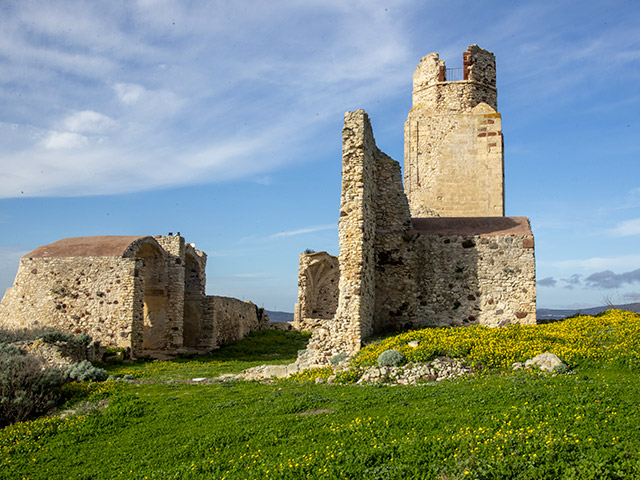
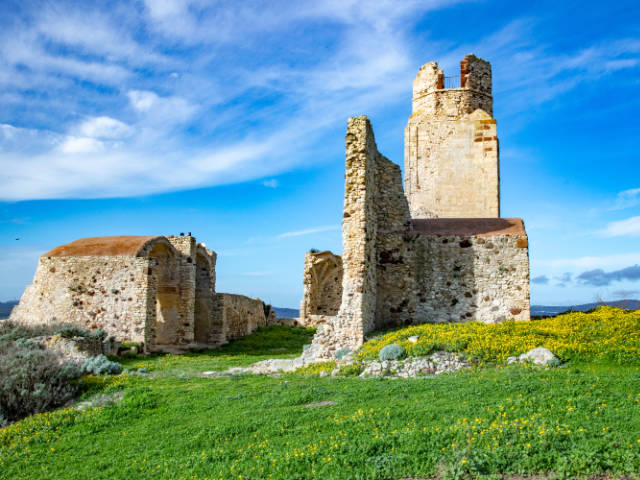
You reach it by walking up from the centre of Chiaramonti, and step by step you understand why this place has never been neutral. Castello Doria stands on the hill that dominates the village, a position that for centuries meant control, defence, power. Here, between the 12th and 13th centuries, the Ligurians built one of the strongholds of their defensive system in Sardinia, designed to withstand Aragonese attacks.
As you move among the remains, you immediately sense that this was no ordinary fortress. Its strategic position made it the object of political and dynastic struggles: Judge Mariano IV wanted it as part of the dowry of Eleonora of Arborea in her marriage to Brancaleone Doria; on the other side, King Peter IV of Aragon sought to gain possession of it through an alternative marriage, tying the Doria family to his own interests. Here, history has never unfolded quietly.
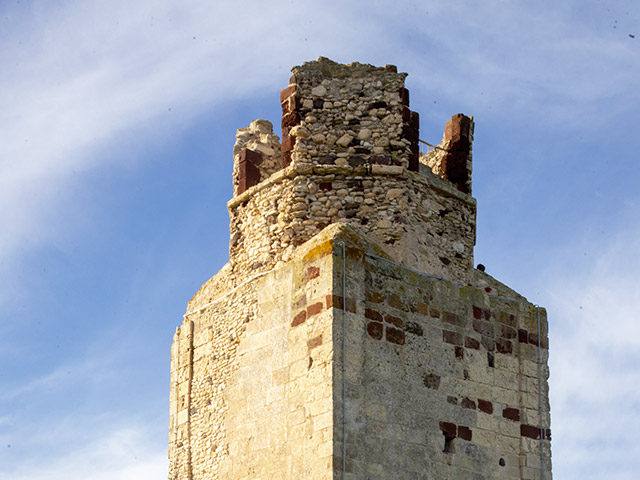
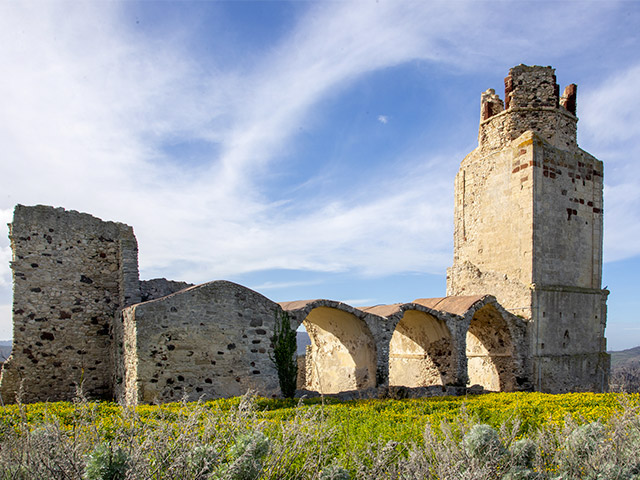
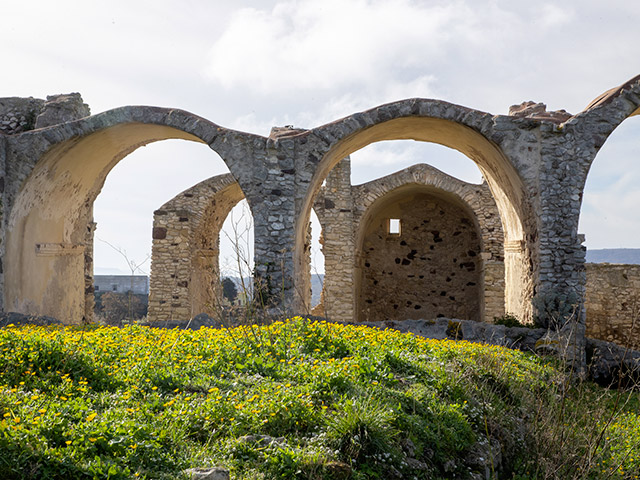
The original structure included a quadrangular tower and a defensive wall enclosing the areas intended to house crossbowmen and soldiers. With the definitive passage of Sardinia under Aragonese rule in 1420, the castle changed its identity: a late Gothic church was built within it, whose remains are still visible today, together with the base of what was meant to be the bell tower.
In the 16th century, on the fortifications of the castle built by Brancaleone Doria, the parish church of San Matteo was established. Yet its spectacular and impervious location also sealed its fate. In 1827, the mayor of Chiaramonti described it as “at least 600 years old, on the edge of a precipitous rock,” officially marking the end of its religious function.
Today, with conflicts and power struggles left behind, Castello Doria has become an oasis of peace steeped in memory. Parts of the ancient parish church still stand: the twelve-metre-high bell tower, grafted onto the medieval castle tower, continues to dominate the village; around the nave, eight chapels can still be identified, with the door frames and vault ribs in Aragonese style, along with the chapel of the Carmelite convent that once flanked the church.
In the surreal silence of this abandoned place, it feels as though you can still hear the tolling of the bells and the voices of the Doria soldiers defending the stronghold. Perhaps this is why today this space—born for war and reshaped by devotion—has become a natural stage for cultural events and international jazz: a place where history is not only seen, but listened to.
Chronology: 12th–13th century
Access: reachable on foot from the centre of Chiaramonti
Sign up for our newsletter to receive updates on news and events.
Via Enrico Toti, 20
07034 . Perfugas (SS) . Sardinia . Italy
CF 9103980090


Project realized through the PSR Sardinia 2014-2022. Measures 19 “Local development support LEADER” – Submix 19.2 Support for the execution of operations under the strategy local participatory development “System actions” - Question Support: 34250295986 - CUP H38J23000360009