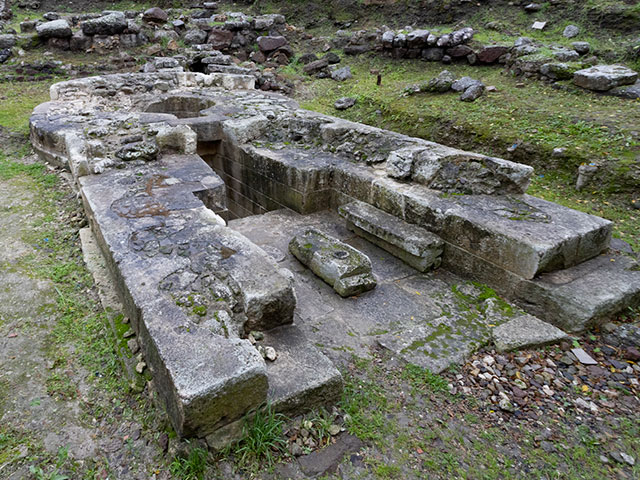
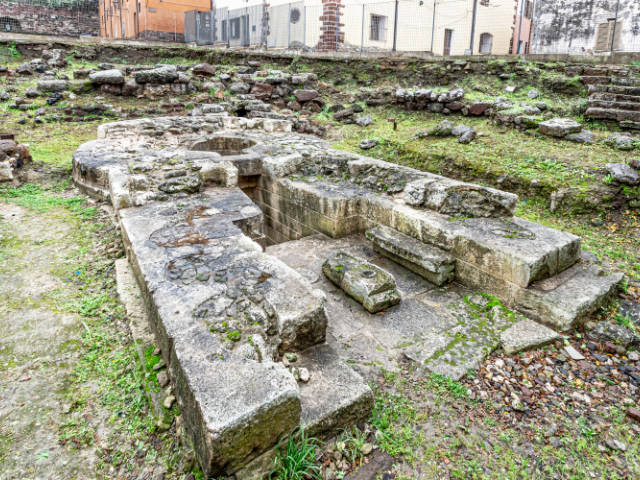
As you walk through the historic center of Perfugas, along Via Garibaldi, there is a place you don’t have to search for very far. It is right there, beside the church of Santa Maria degli Angeli. And yet, as you approach the Sacred Well of Predio Canopoli, you clearly feel that you are about to leave the present behind and move toward something far more ancient.
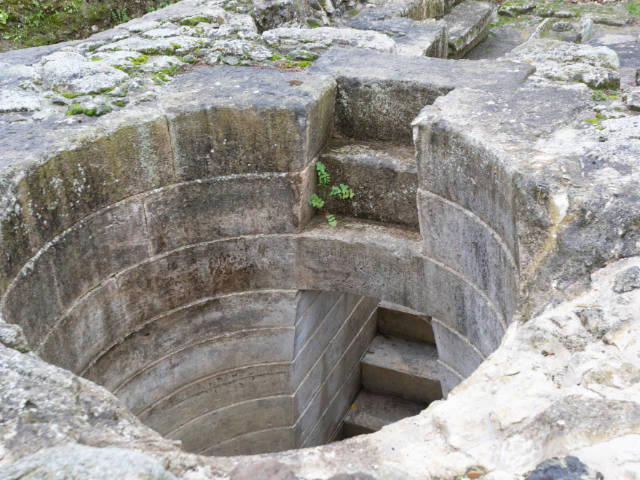
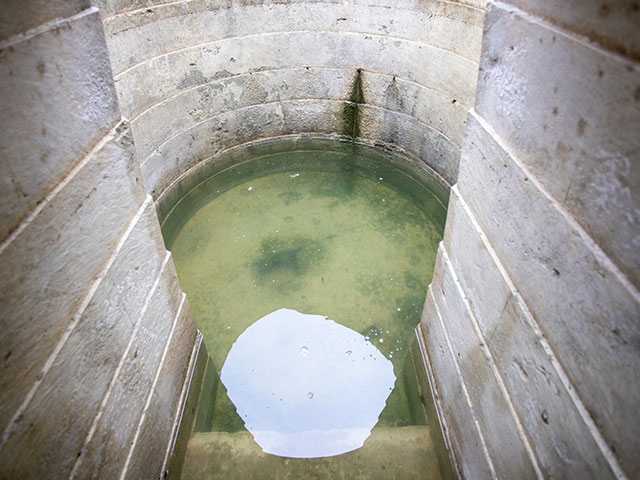
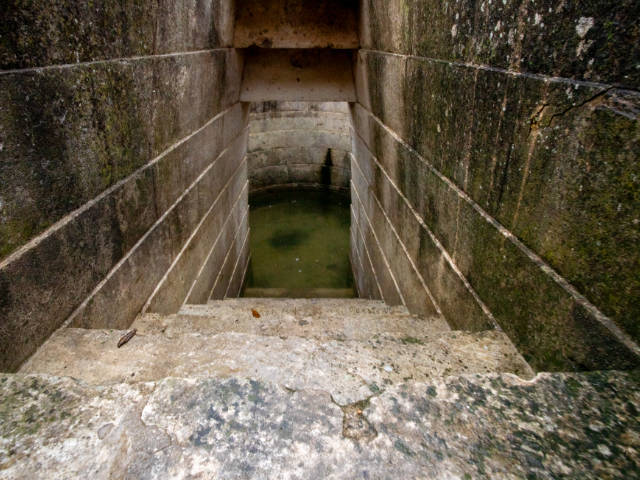
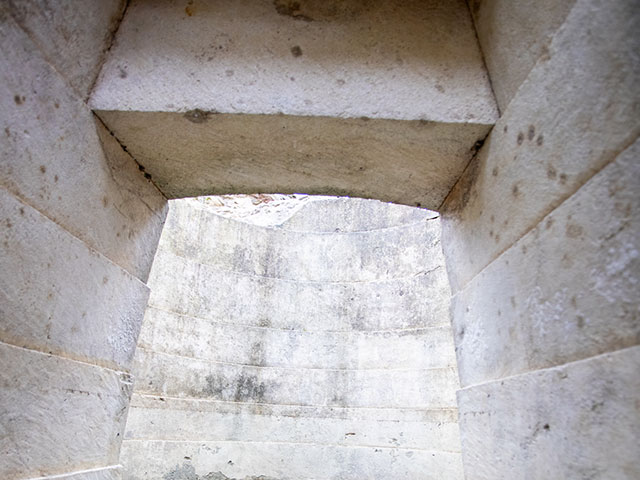
In front of you opens a paved rectangular atrium, sober and measured. It is the antechamber of the sacred. From here, a staircase of eight steps, covered by a stepped vault, leads you slowly downward. With each step the light fades, the air grows cooler, your gaze becomes more focused. At the end of the descent you enter the well chamber: a perfectly circular space, truncated-conical in shape, carved and built with a precision that still impresses today. The roof is no longer there, but the smoothed walls and the stone paving clearly reveal the extraordinary quality of this architecture.
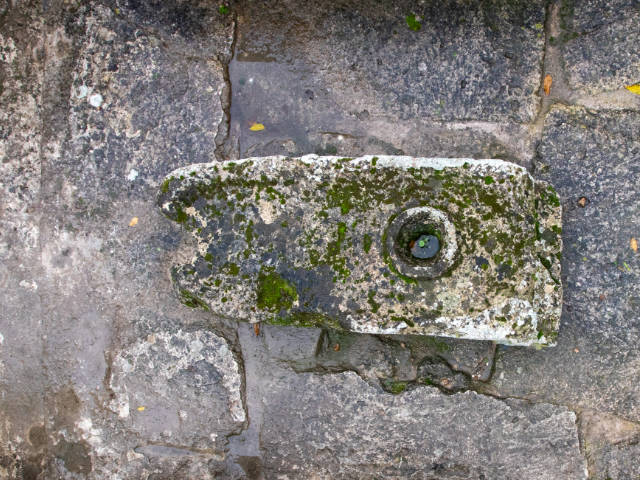
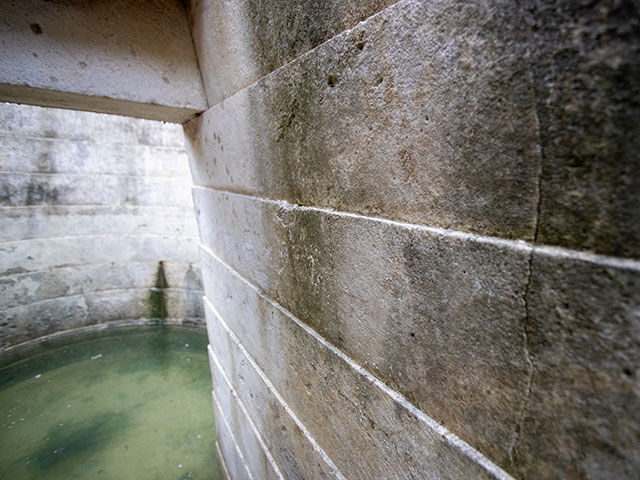
Everything is built with finely worked limestone blocks, laid dry, without mortar. The stones are fitted together with such skill that they form walls connected by T-shaped or dovetail blocks. A construction technique that closely recalls the famous sanctuary of Santa Cristina in Paulilatino. On the outer face, you will notice the projecting bosses of the blocks: two for each stone. It is not certain whether they had a practical, symbolic, or aesthetic function. Some interpret them as a reference to the horns of the bull, a sacred animal central to the cult.
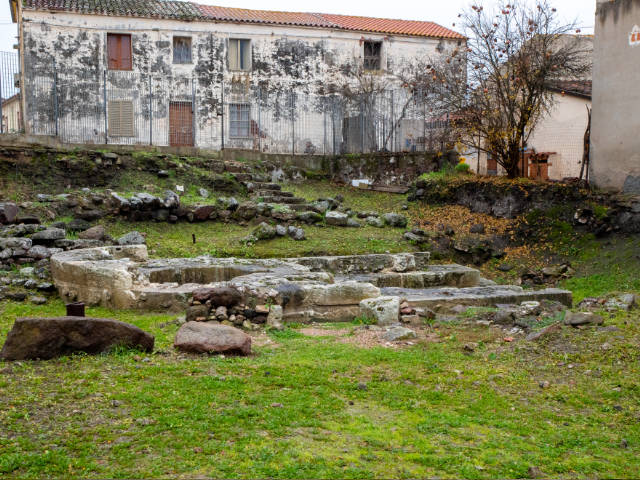
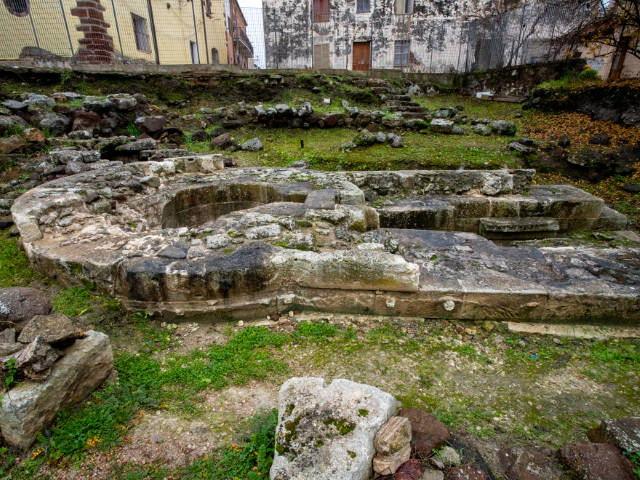
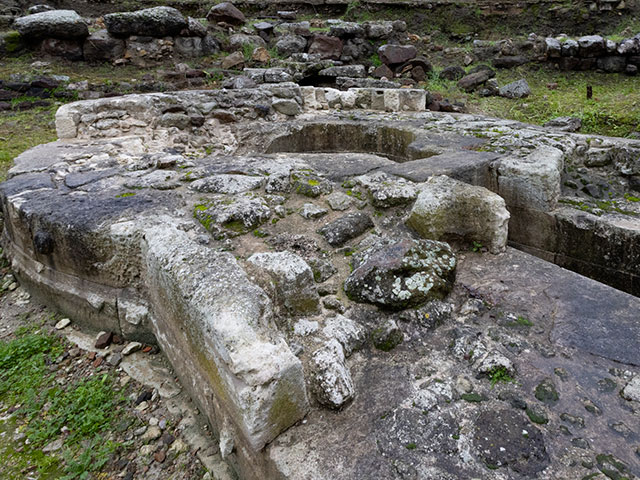
Around the well, the traces of a perimeter enclosure made of large trachyte blocks are still visible, built over the remains of an earlier rectangular temple in antis. Nearby, the remains of structures attributed to a Nuragic village also emerge. This was not an isolated place, but the spiritual heart of a community.
Archaeological excavations have brought to light numerous ex-votos, confirming the cultic function of the site. Among them stands out a small bronze figurine depicting a bull, considered one of the most elegant bovine representations ever found in Sardinia. Today it can be seen at the National Museum “G. A. Sanna” in Sassari. Other finds are displayed in the archaeological and paleobotanical museum of Perfugas, which tells a very long story, from the Paleolithic to the Middle Ages.
As you leave the well, lift your gaze: directly in front of you stands the church of Santa Maria degli Angeli, home to the largest retablo in Sardinia, dedicated to Saint George. Here, within just a few steps, you cross millennia of worship, architecture and faith — without ever leaving the center of the village.
Chronology: Nuragic period
Three days discovering the Regenerating Lands, experiencing each stop at a relaxed pace, exploring historical, archaeological, and cultural wonders without haste.
Sign up for our newsletter to receive updates on news and events.
Via Enrico Toti, 20
07034 . Perfugas (SS) . Sardinia . Italy
CF 9103980090


Project realized through the PSR Sardinia 2014-2022. Measures 19 “Local development support LEADER” – Submix 19.2 Support for the execution of operations under the strategy local participatory development “System actions” - Question Support: 34250295986 - CUP H38J23000360009